
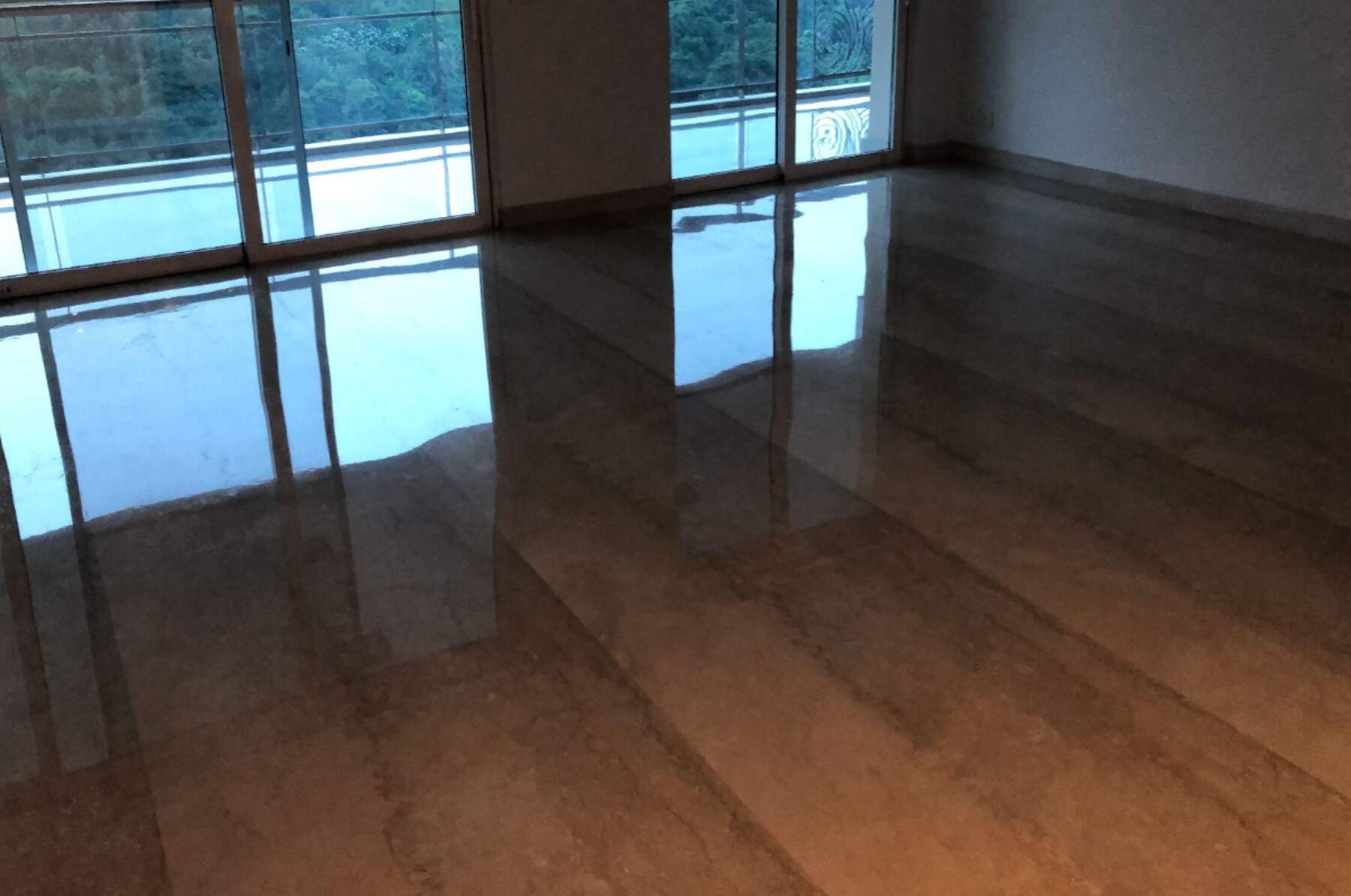
You have cleaned your floors, mopped them, and dried them, but when the light hits the surface at a certain angle, you see dull patches where the reflection disappears. These are not stains—they are surface damage. Here is a deep dive into why this happens and how we resolve it.
Diagnosis: Etching vs. Staining
The most common confusion we see is between these two terms. You must diagnose the problem correctly before fixing it.
A Stain is when a substance has penetrated the pores. It is usually darker than the stone (brown, pink, or grey). It does not affect the texture or the shine; it is simply a discoloration inside the stone.
An Etch is physical damage to the surface. It is usually lighter than the stone (white or dull). If you run your fingers over it, it might feel slightly rougher than the surrounding area. This is a chemical burn.
The Solution for Etching
For very minor etching (like a water ring), you may be able to use a specialized marble polishing powder (Tin Oxide). This is applied with a damp cloth and rubbed in circular motions to re-gloss the area.
However, for large dull spots caused by foot traffic or heavy spills, DIY powders will not work. The damage has removed the "crust" of the polish. To fix this, we must use diamond abrasives to hone the stone down below the level of the damage, and then bring it back up through the polishing grits. It is essentially surgery for your floor.
Prevention: The Walk-Off Mat
The number one cause of dull spots in entryways is sand. Sand is harder than marble. When you walk on a sandy floor, you are effectively sandpapering your own home.
The simplest, cheapest, and most effective way to prevent dull spots is to place a high-quality walk-off mat at every entrance. It should be long enough that a person takes two full steps on the mat before their feet touch the stone. This captures the grit before it can wreak havoc on your polished finish.